
India's New Nautical Oral Exam Prep Programme — Everything You Need to Know
The DGS & CMMI's landmark Structured Oral Examination Preparatory Programme is here. Here's your complete guide.
Should you have already passed your MMD written tests but are finding the oral viva difficult, or should you just like to step into that examination hall armed with all the preparation you need, then we have some exciting news for you at the DGS!
The Directorate General of Shipping (DGS) Circular Number 07 of 2026 was released by DGS, Mumbai on 21st February 2026, wherein a structured oral examination preparatory programme in association with the Company of Master Mariners of India (CMMI) was introduced. It is the first structured oral examination preparatory programme for seafarers in India under the STCW Convention, which is a revolution for all those who aspire to obtain their Certificate of Competency.
From second mates (FG) and chief mates (FG) to masters (FG/NCV), irrespective of your specialization if you want to pass your oral examination, then this guide is for you. It provides a complete overview of the structured oral examination preparatory program, along with a practical section designed specially for deck cadets and officers staying at Mumbai for this course.
Why Did DGS Launch This Programme?
The oral exam analysis between 2024 and 2025 showed some alarming facts. A good number of students were finding it hard to pass the oral test even after clearing the written test. It was the issue raised by the DGS, who realized that one of the problems here was that candidates lacked a formal approach to prepare for the oral examination process.
Unlike the written test, which is more about having the right information in mind, an oral viva requires you to have good communication skills, as well as making sound decisions and professional judgment. You need to be able to apply your reasoning and knowledge in an exam environment. The oral program aims to help students prepare for exactly this.
⚠️ Important Note
While participation may be voluntary, it is important to note that DGS can make participation compulsory for individuals who fail oral tests during various attempts.
Undertaking the program does not necessarily mean you will pass your exams, and it will not affect the decision-making process of the examiner.
Who Is This Programme For?
The program admits those applicants who have cleared their written exams and will be undergoing oral exams for the following certificates:
Second Mate — Foreign Going (FG) / NWKO (NCV)
Chief Mate — Foreign Going (FG) / NCV
Master — Foreign Going (FG) / NCV (also called ASM — Additional Subject Master)
Preferably the applicants having three or more failures in oral examinations would be admitted. However, all other eligible candidates may apply too.
Programme Structure: Two Intensive Weeks
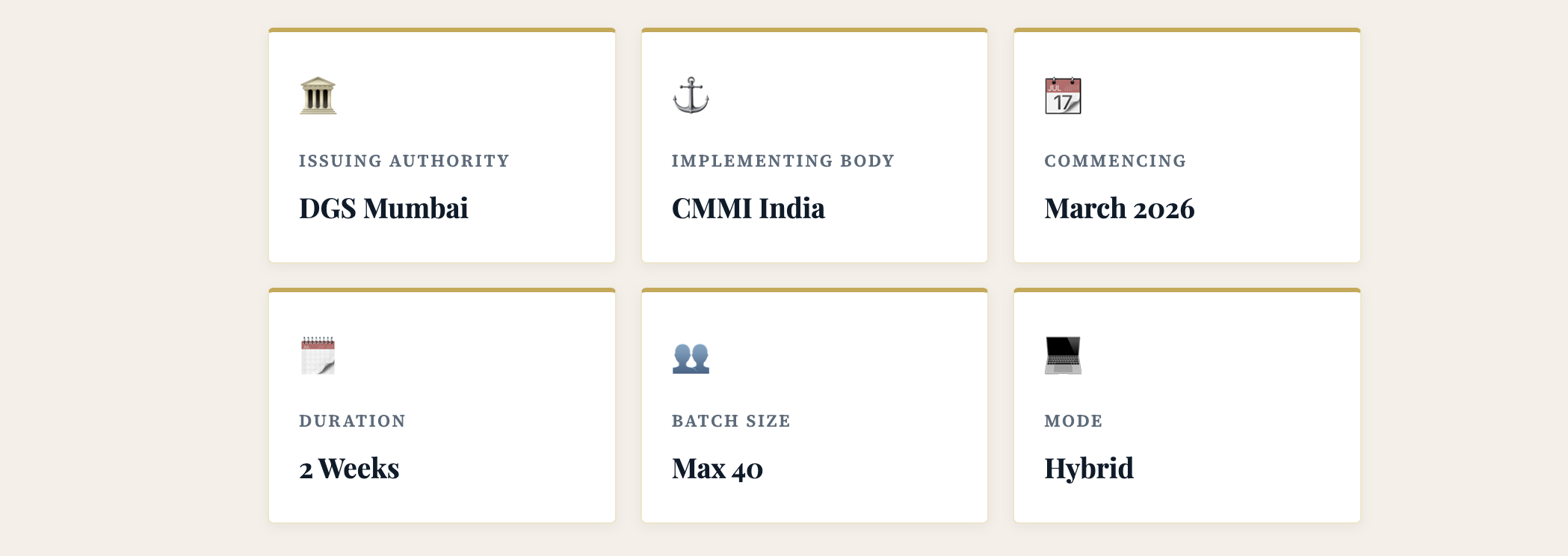
The program spans two weeks, operating on weekdays between 1000 to 1700 hours (seven hours each day). It follows an interactive approach involving mentoring – imagine lively discussions, oral exercises, and practice viva voce examinations, not merely listening to lectures.
Three-Stage Assessment Framework
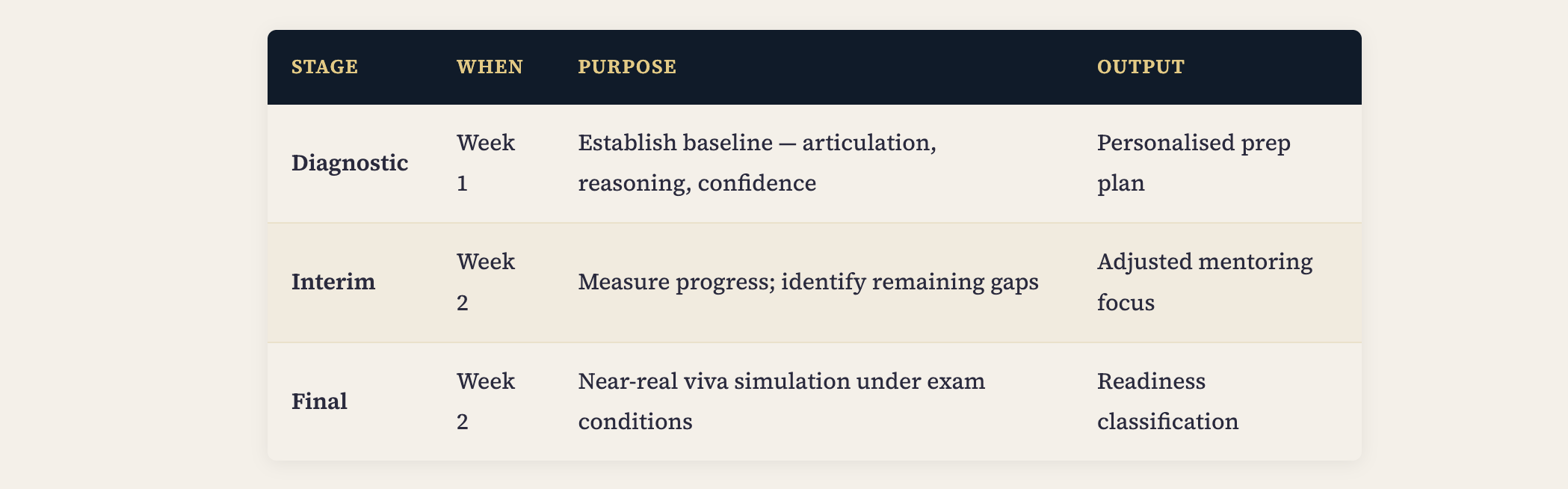
Each oral examination is conducted using simulation, whereby at least 10-15 minutes is devoted to each candidate. All examinations are marked using a five-point rubric on the following areas: clarity in expression, logical sequence, conceptual knowledge, application attitude, confidence, and examiner relations.
At programme conclusion, candidates are classified as:
Ready for Examination — Adequate articulation and confidence demonstrated
Requires Limited Revision — Minor gaps identified, manageable with short revision
Requires Extended Preparation — Significant gaps in articulation or reasoning persist
What Topics Are Covered? (Oral Syllabus Overview)
For 2nd Mate (FG) / NWKO (NCV) — Operational Level
Celestial and terrestrial navigation, position fixing, dead reckoning
Charts and nautical publications — T&P Notices, Sailing Directions
Electronic navigation — ECDIS, GPS vs DGPS, RADAR and ARPA
COLREG 1972 — lights, shapes, sound signals, watchkeeping
Meteorology — weather systems, barometer, whirling psychrometer
Cargo handling, IMDG Code, stability, ship construction
Emergency procedures, SAR — IAMSAR Manual
Bridge Resource Management and leadership at operational level
For Chief Mate (FG) / NCV — Management Level
Comprehensive voyage planning — Polar Code, VTS, restricted waters
Advanced compass error determination; blind pilotage planning
Coordinating SAR operations per IAMSAR
Weather routing — TRS avoidance, synoptic charts, ocean currents
Advanced ship manoeuvring — berthing, anchoring, shallow water effects
Cargo at management level — IMDG, IMSBC, dangerous goods
Damage stability, watertight integrity, ship construction
Leadership, resource management, MARPOL compliance
For Master (FG) / NCV — ASM Topics
Indian Merchant Shipping Act 2025 — latest amendments
ISM Code, ISPS Code, MLC 2006, Ship Security Alert Systems
Survey and Certification — SOLAS, Load Line, Tonnage, MLC inspections
Port State Control, Flag State inspections, vetting — MOUs and blacklists
Advanced ship handling — STS operations, TSS, Malacca/Singapore straits
Carriage of cargoes — charter parties, Bills of Lading, COGSA, VGM
MARPOL Annex I–VI, SOPEP, SEEMP, Ballast Water Convention, BWMS
Maritime cyber security, MASS ships, IGF Code, UNCLOS-82
Radio communications — GMDSS, ALRS Vol. V, SAR procedures
🏙️ Staying in Mumbai for the Course: A Practical Guide for Deck Cadets & Officers
For those who are cadets or junior officers who have come from elsewhere to undergo the two-week training program at CMMI, here is what you should consider to arrange your stay efficiently and economically.
📍 Where Is the Course Held?
The programme is run by CMMI (Company of Master Mariners of India). Their office is located in the Ballard Estate area of South Mumbai — close to the MMD Mumbai offices. Check www.cmmi.co.in for the exact venue and batch schedule.
🛏️ Accommodation Options Near the Venue
Maritime Hostels / Seafarer Hostels – Search for seafarers’ hostel near Ballard Estate or P D'Mello Road. These are cheap and know about the seafarer community’s requirements.
Paying Guest Facilities in Fort / Colaba / Byculla - There are plenty of PGs available at a cost ranging between ₹600 – ₹1,200/night. You can book these on NoBroker, OYO, or directly from marine training institute notice board.
Budget Hotels near CST / Churchgate – Great accessibility to Ballard Estate by local train. Price is expected to be ₹800 – ₹1,500/night for a decent room.
YMCA / Salvation Army Hostels – There are few hostels in south Mumbai for professionals that come at a very low rate – worth giving a call before coming.
Coordinating with Batchmates – Many aspirants live in shared rooms to keep their budget low. CMMI might help you connect with batchmates from your city.
🚆 Getting Around Mumbai
Use the local trains of Mumbai; a monthly ticket can help if you are here for at least two weeks. CST is the nearest big train station from Ballard Estate.
Course timings are 1000-1700 hours; therefore, you will not face any problem while traveling during non-peak hours.
Last mile connectivity through auto/taxi services is very easy.
💰 Budget Planning (Approximate for 2 Weeks)
Accommodation: ₹12,000–₹20,000 (shared/budget room)
Food (dabba/local restaurants near Ballard Estate): ₹4,000–₹6,000
Local travel: ₹800–₹1,200
Study materials / books: ₹1,000–₹2,000
Total estimate: ₹18,000–₹30,000 for two weeks
📚 What to Bring
Your past written exam papers and any question banks you've collected
Key reference books (Reeds, Nichols, COLREG guide, meteorology text)
Notepad for mentor feedback during mock vivas
Formal attire for mock oral sessions — treat them like the real thing
Pro Tips to Maximise Your Two Weeks
Do review your exam topics in writing before coming to class – the course assumes some prior learning, not replacement
Attend all classes – 90% attendance is necessary for an attendance certificate
Bring your past oral questions by external/ internal examiners to class and ask them during the class
Take your mock oral exams seriously – dress formally, be composed, and treat each mock exam as if it was the statutory one
Be honest in your feedback regarding the course and instructors – it will help future batches too
Socialize extensively with your batch mates – knowing common examiner tricks is extremely valuable.
How to Register & Check the Schedule
CMMI publishes the course calendar on its official website. The batches are organized based on grades, such as 2nd Mate, Chief Mate, and Master (ASM). A maximum of 40 participants can enroll in one batch, so it is wise to apply early.
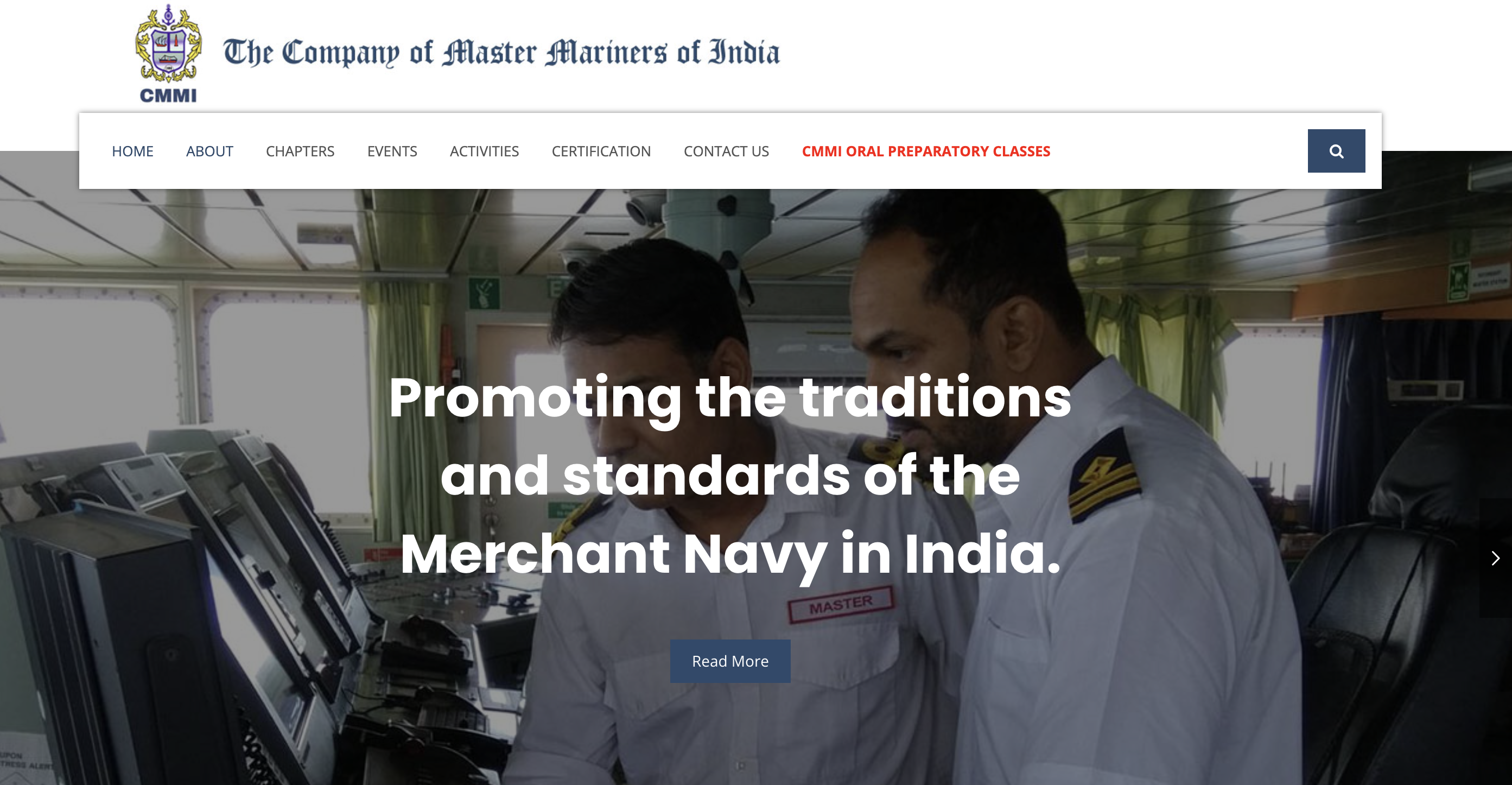
Check www.cmmi.co.in for the latest batch calendar and registration process
Be sure to verify the batch time according to your grade before arranging for accommodation
Inquire from CMMI regarding the fee structure and scholarship facility for repeated attempts
Bring your clearance documents from the written examination when you enroll
The Bottom Line
The DGS Structured Oral Examination Preparatory Programme is an initiative long overdue and one that is quite well-thought-out indeed. As far as those candidates struggling with oral examinations despite being well versed in their subjects, the problem lies not in the candidate's lack of knowledge, but rather in the fact that being aware of something and being able to deliver it in a convincing, logical and clear way in the examination room are two entirely separate issues.
For a deck cadet or even a junior officer taking the trip all the way to Mumbai just for this programme, there is no denying the fact that it is a considerable commitment in terms of time and money – two weeks in Mumbai is not to be underestimated after all. However, what are two weeks when set against the possibility of delaying obtaining your Certificate of Competency for several years?
Ready to Get Started?
Check the latest batch schedule and register on the official CMMI website before seats fill up.